
A Pakistani wedding isn’t one event — it’s a celebration that unfolds over days, sometimes a whole week. From the intimate dholki to the sacred nikkah, the regal barat, the colourful mehendi, and the gracious walima — each function has its own energy, its own dress code, and its own soul.
So why would you use the exact same card for all of them?
At The Framers, we’ve seen a clear trend among Pakistani couples in 2026: they want coordinated, not identical, invitations. A suite of cards that feel like they belong together — sharing a colour family, typography, and design DNA — but each one tailored to the personality of its event.
In this guide, we’ll walk you through how to design event-specific wedding cards that reflect the unique spirit of every function in a Pakistani wedding.
1. Why Different Cards for Different Events?
Three practical reasons:
- Different audiences: Not everyone is invited to every event. Your nikkah might be intimate (50-100 guests), while the barat has 500. Separate cards let you manage your guest list precisely.
- Setting expectations: A colourful, playful mehendi card tells guests to expect dancing, dholak, and fun. A formal barat card tells them to come dressed to impress.
- Design harmony: A coordinated suite shows thoughtfulness and attention to detail. Your guests notice — and they remember.
Pro Tip from our studio: Ordering a coordinated suite doesn’t mean ordering 4× your guest count. Order nikkah cards (50-100), barat cards (200-500), walima cards (200-400), and mehendi cards (100-200) based on each event’s actual guest list. This keeps budgets practical.
2. Nikkah Invitation Cards: Sacred & Elegant
The Mood
The nikkah is the Islamic marriage contract — a sacred, spiritual moment. The invitation should communicate reverence, beauty, and intimacy.
Design Principles
| Element | Recommendation |
| Colour palette | Whites, ivories, champagne golds, soft greens, muted blush |
| Typography | Elegant serif fonts or refined calligraphy. Nastaliq Urdu script is beautiful here. |
| Motifs | Islamic geometric patterns, subtle florals, gold crescent motifs, Mughal arch frames |
| Material | Vellum wraps, premium cardstock, or acrylic with minimal design for maximum grace |
| Finishing | Gold or champagne foil stamping, wax seals, calligraphy |
What to Include
- Bismillah at the top
- Quranic verse (Surah Ar-Rum 30:21 is most popular)
- Both families’ names
- Bride and groom names in elegant calligraphy
- Date, time, venue
- Keep it short and spiritual — this isn’t the card for detailed event schedules
Perfect Material Match
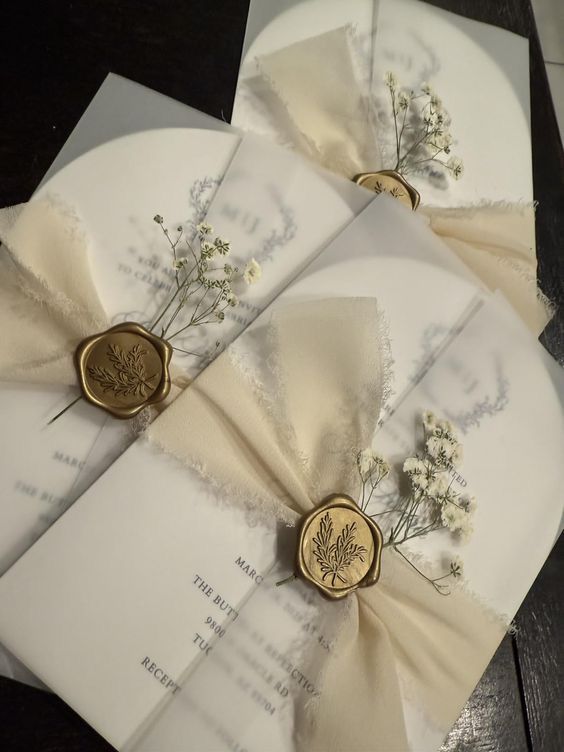
The Rustic Vellum Wedding Card with Wax Seal (Ivory) captures the nikkah spirit perfectly — soft, delicate, and beautifully understated.
3. Barat Invitation Cards: Grand & Formal {#barat}
The Mood
The barat is the main event — the grandest celebration in a Pakistani wedding. The card should match that magnitude. Think of it as the headline act.
Design Principles
| Element | Recommendation |
| Colour palette | Deep jewel tones — emerald green, royal burgundy, midnight navy, black & gold |
| Typography | Bold serif or modern script. Full caps for the couple’s names. |
| Motifs | Grand florals, Mughal borders, intricate laser-cut patterns, bold monograms |
| Material | Acrylic (for modern weddings), velvet (for traditional), or boxed invitations (for VIPs) |
| Finishing | Gold/rose gold foil stamping, embossing, laser cutting, satin ribbons |
What to Include
- Host parents’ names (traditionally the groom’s side hosts the barat)
- Bride and groom names prominently
- Full event details: date, time, venue with hall/marquee name
- Dinner/program details if applicable
- RSVP information for seated dinners
Perfect Material Match
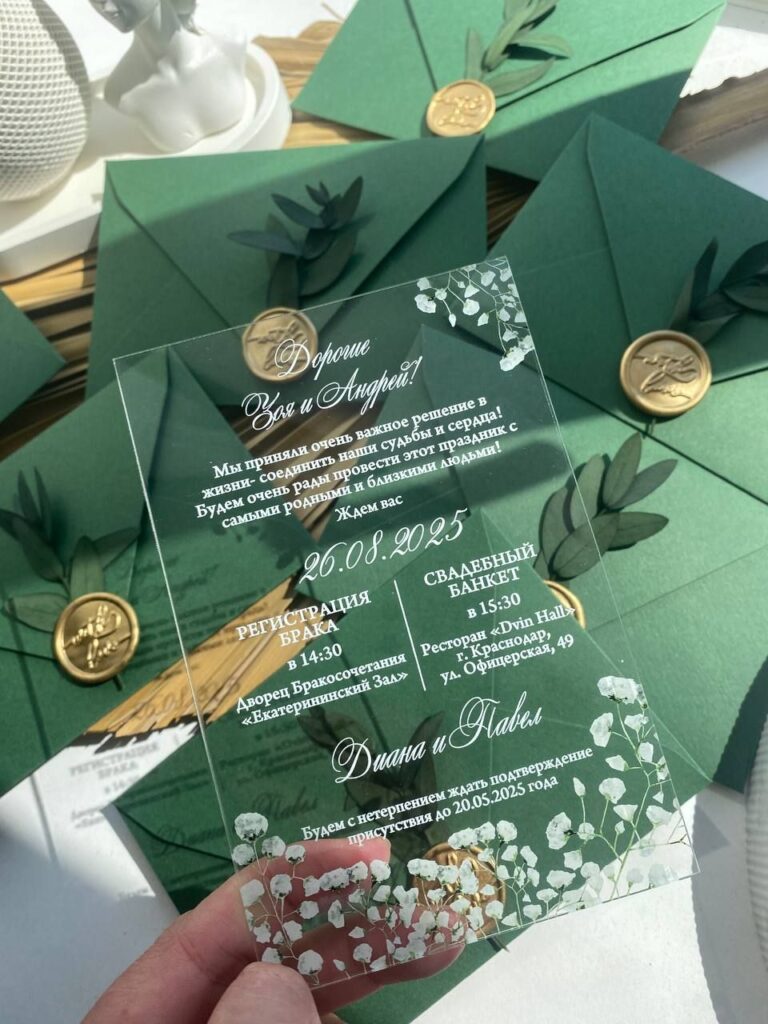
The Elegant Botanical Floral Acrylic Card (Emerald Green) embodies barat grandeur — deep green botanicals on crystal-clear acrylic with bold typography.
For the ultimate VIP impact, present this acrylic card inside a luxury boxed invitation — your guests won’t forget it.
4. Mehendi Invitation Cards: Vibrant & Festive
The Mood
The mehendi is pure joy. It’s colour, music, dancing, laughter, and celebration. This is the one event where your wedding card can — and should — be playful.
Design Principles
| Element | Recommendation |
| Colour palette | Marigold yellow, saffron orange, hot pink, turquoise, lime green |
| Typography | Fun script fonts, handwritten styles, or modern brush lettering |
| Motifs | Henna/mehndi patterns, marigold flowers, dholak illustrations, strings of lights, pom-poms |
| Material | Printed cardstock (bright colours pop best on paper), vellum, or colourful acrylic |
| Finishing | Bright foil, embossed patterns, playful wax seals, tassel ties |
What to Include
- A fun, warm invitation line (not overly formal)
- Event name, date, time, venue
- Optional: dress code note (“Wear your brightest colours!”)
- Optional: mention of musical/entertainment activities
What Sets It Apart
This is the one card where emojis, fun language, and exclamation marks are welcome. It should feel like an invitation to a party, not a formal ceremony.
5. Walima Invitation Cards: Warm & Gracious {#walima}
The Mood
The walima is a reception — a feast of gratitude hosted after the marriage. It’s celebratory but slightly more subdued than the barat. Think elegant warmth.
Design Principles
| Element | Recommendation |
| Colour palette | Soft pastels, champagne, dusty rose, sage green, lavender |
| Typography | Refined, classic fonts. Slightly softer than the barat card. |
| Motifs | Delicate florals, botanical illustrations, soft watercolour washes |
| Material | Vellum wraps, premium cardstock, or coordinated acrylic |
| Finishing | Subtle foil accents, silk ribbon, dried flower embellishments |
What to Include
- Host names (traditionally the groom’s family)
- Acknowledgment of the marriage (“In celebration of the marriage of…”)
- Date, time, venue
- A warm closing line expressing gratitude
Perfect Material Match
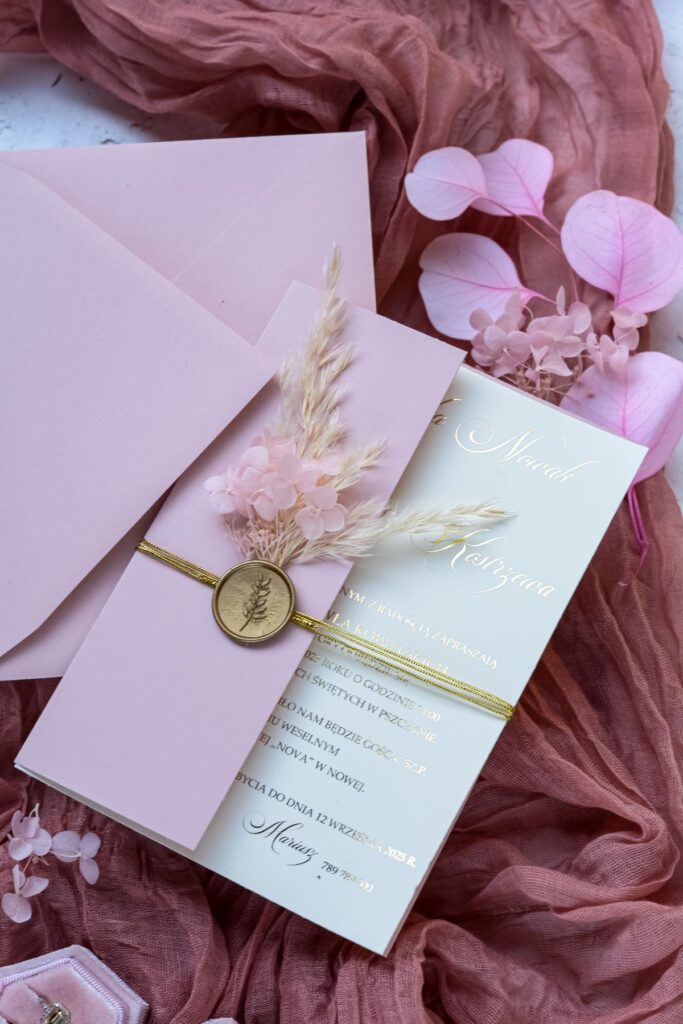
The Boho Wedding Card with Wax Seal & Dried Flowers (Blush Pink) — with its soft palette and delicate dried flower embellishments — is our top pick for walima invitations.
6. Save the Date Cards: Building Anticipation {#save-the-date}
The Concept
Save-the-date cards are sent 2-3 months before the wedding to give guests advance notice. They’re becoming increasingly popular in Pakistan, especially in Lahore, Karachi, and Islamabad.
Design Tips
- Keep it simple: just the couple’s names, the wedding date, and “Formal invitation to follow”
- Use a beautiful pre-wedding photo if available
- Match the colour palette of your main wedding suite
- Materials: mini acrylic plaques, magnet cards, or printed cardstock work well
- These are perfect for social media announcements, too
7. How to Create a Coordinated Wedding Card Suite {#coordinated}
The key to a polished suite is consistency with variation. Here’s how:
The Unifying Thread
Choose 2-3 elements that remain consistent across ALL cards:
- Colour family (e.g., the same shade of gold appears in every card)
- Typography (the same font for the couple’s names)
- A motif or logo (e.g., a custom monogram or floral border)
The Variable Element
Let each card’s personality change through:
- Background colour (deep emerald for barat, bright yellow for mehendi, soft blush for walima)
- Illustration style (bold florals for barat, henna patterns for mehendi, watercolour for walima)
- Tone of text (formal for barat, playful for mehendi, warm for walima)
Real Example
Imagine a suite where:
- Nikkah card: Ivory vellum, gold foil calligraphy, wax seal — soft and sacred
- Barat card: Emerald acrylic, gold botanical print — bold and grand
- Mehendi card: Bright cardstock, marigold and pink, hand-drawn henna motifs — joyful
- Walima card: Blush vellum, dried flowers, silk ribbon — warm and gracious
- All four share the same gold font for the couple’s names and the same calligraphy style
That’s a suite that tells a story.
At The Framers, we specialize in designing these coordinated suites. Share your vision and we’ll create a complete stationery package for every event. Browse our wedding card collection for inspiration.
8. Our Top Picks from The Framers
For Nikkah
Rustic Vellum Wedding Card with Wax Seal & Silk Ribbon (Ivory) View →
For Barat
Elegant Botanical Acrylic Card (Emerald Green) View →
For Mehendi
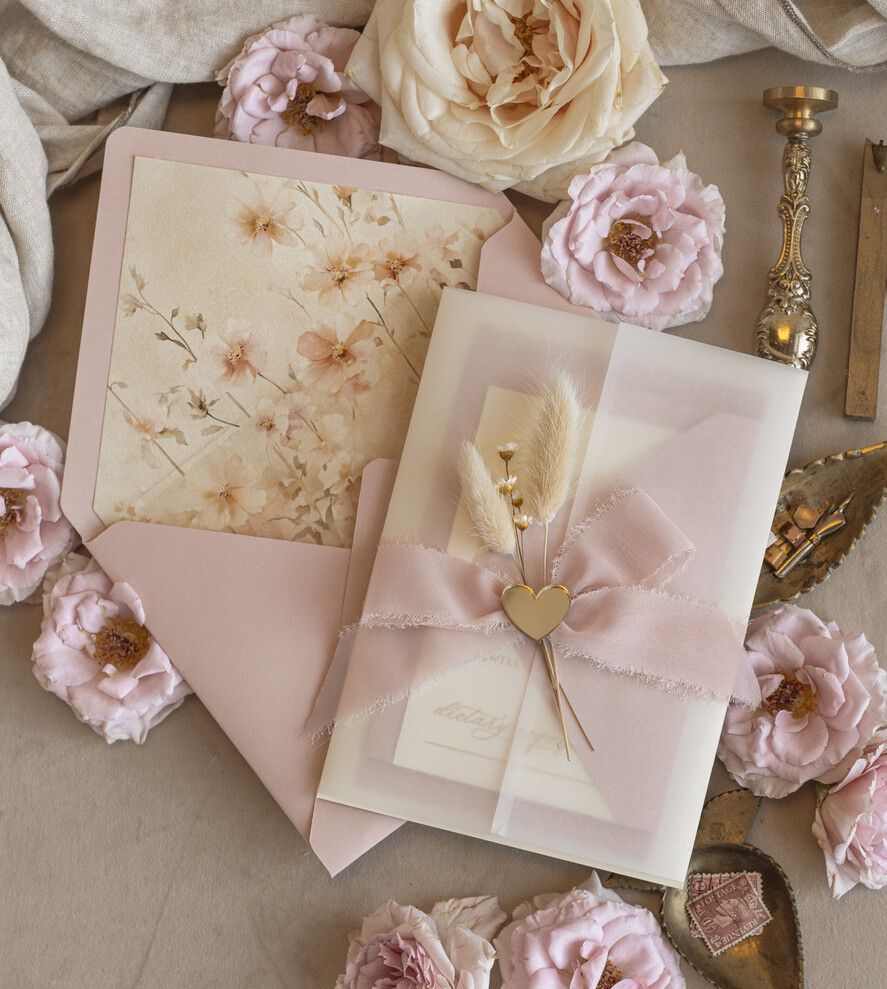
Simple Floral Vellum Wrap (Pink Ribbon) — bright, cheerful, and budget-friendly View →
For Walima
Boho Wedding Card with Wax Seal & Dried Flowers (Blush Pink) View →
Browse all our wedding cards →
Frequently Asked Questions
Do I need separate cards for each event?
You don’t need them, but we strongly recommend them for weddings with more than two events. Separate cards allow you to invite different guest lists to different events, and each card’s design can match the event’s personality. If budget is a concern, combine all events on one card — our acrylic cards work well for multi-event layouts.
What’s the most popular event order for Pakistani wedding cards?
The most common suite order is: Save the Date → Nikkah Card → Barat Card → Walima Card. Mehendi cards are popular in Lahore and parts of Punjab but less common in some other regions. Every family’s tradition is different!
How many cards should I order for each event?
It varies by guest list. Typical quantities: Nikkah (50-150), Barat (200-500), Walima (200-400), Mehendi (100-200). We recommend ordering 10-15% extra for last-minute additions and keepsakes.
Can I use different materials for different events?
Absolutely! This is actually our recommended approach. Many couples use premium acrylic or boxed invitations for the barat, vellum wraps for the nikkah and walima, and printed cardstock for the mehendi. As long as the colour palette and typography are consistent, the suite feels cohesive.
You Might Also Like
- Wedding Cards in Pakistan 2026: Complete Guide
- Acrylic vs Glass vs Wooden Wedding Cards
- Wedding Invitation Wording Templates (Urdu & English)
- Pakistani Wedding Traditions Explained: From Dholki to Walima
Ready to design your complete wedding card suite?